
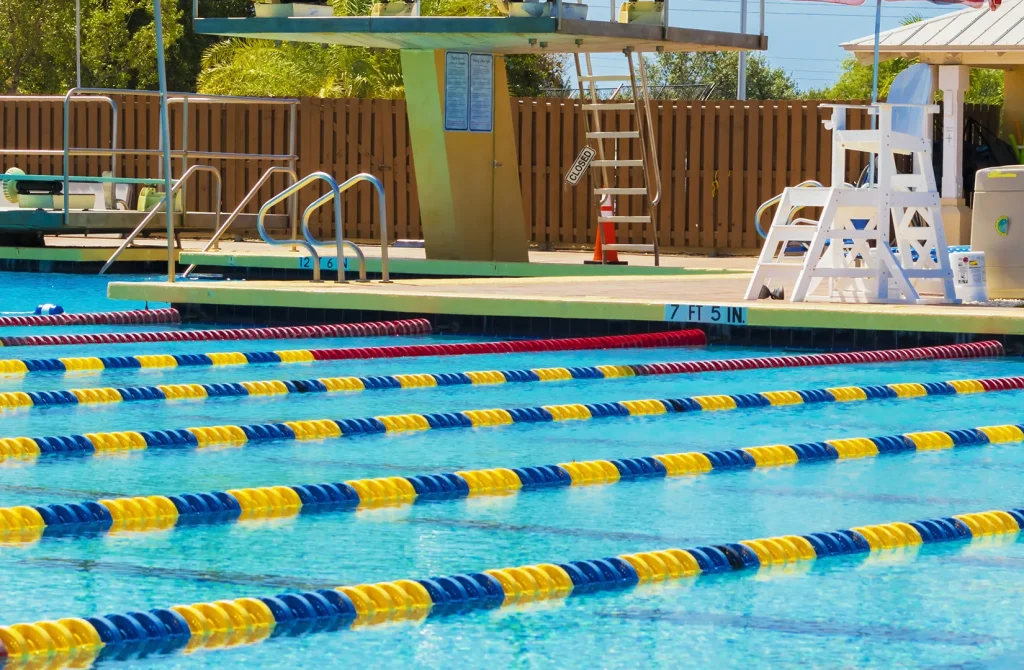
Australia’s aquatic environments are as diverse as the communities that use them. From coastal public pools exposed to salt-laden air, to outdoor facilities enduring intense UV and summer heat, through to hydrotherapy pools, hotels, schools and community centres, aquatic equipment needs to do more than simply function, it needs to perform reliably in tough Aussie conditions.
When accessibility equipment is being specified, the environment in which it will operate should be considered alongside the needs of the people who will use it.
At Para Mobility, this has been central to our approach for more than 40 years. As an Australian manufacturer of aquatic access equipment, we understand that good accessible design is about creating practical, durable and dignified access that works within the realities of aquatic facilities.
Australian conditions place unique demands on aquatic equipment
Pool environments are already challenging for materials and mechanical components. Add our erratic climate conditions to the mix and equipment can be exposed to a demanding combination of:
- Chlorinated or saltwater environments
- High humidity and frequent moisture
- Strong UV exposure
- High ambient and surface temperatures
- Salt-laden coastal air
- Outdoor weather exposure
- Frequent commercial use
- Repeated movement, cleaning and storage
These factors influence everything from material selection and component design to maintenance requirements and how equipment is moved and stored.
An accessibility solution may look suitable on paper, but its long-term value depends on how well it performs within the actual environment.
Material selection matters
Corrosion resistance is particularly important around pools.
Para Mobility’s Platypus Pool Steps, for example, use 316 stainless steel handrails combined with HDPE components. Material choices such as these are important because aquatic equipment is repeatedly exposed to water, chemicals and moisture.
For aquatic wheelchairs, there are additional considerations. Para Mobility’s Pelican and Platypus Aquatic Wheelchairs use furniture-grade PVC frames, which are lightweight, rustproof and well suited to wet environments. Unlike metal surfaces, the PVC frame also does not readily absorb heat; an important practical consideration for equipment used around outdoor pools.
Good material selection isn’t simply about extending product life. It can influence user comfort, handling, maintenance and the everyday practicality of the equipment.
Designing for intense Australian sun
Anyone who has walked barefoot across a pool deck in summer knows how quickly exposed surfaces can heat up.
Accessibility equipment can spend significant periods outdoors, making UV resistance and heat management important considerations. Surfaces and components that become excessively hot may create discomfort for users and make equipment less practical for staff to handle.
UV exposure can also progressively degrade unsuitable plastics, fabrics and finishes.
Coastal pools introduce another challenge
Australia has an extraordinary number of aquatic facilities located near the coast.
Salt in the air can accelerate corrosion, even when equipment isn’t directly exposed to seawater. Combined with chlorinated pool water and humidity, coastal conditions can create an especially aggressive environment.
Selecting corrosion-resistant materials and establishing appropriate cleaning and maintenance procedures can significantly improve equipment longevity.
This is also why accessibility equipment shouldn’t be considered in isolation. Where and how it will be stored, rinsed and maintained should form part of the planning process.
Durability supports accessibility
There is little benefit in installing accessible equipment if it is regularly unavailable because of deterioration, difficult maintenance or unsuitable components.
Durability and accessibility are closely connected.
Equipment that has been designed for its operating environment is more likely to remain available and functional when somebody needs it. For councils, aquatic operators, schools, hotels and health facilities, this also helps protect the long-term value of the investment.
The objective should be reliable access, not simply accessible equipment on the day a facility opens.
Para Mobility has been designing and manufacturing accessibility solutions in Australia since 1983. That local experience provides an important perspective. Our products are used across public aquatic centres, hydrotherapy facilities, hotels, schools, health facilities, community organisations and private pools throughout Australia.
It means our team understands the practical questions that can easily be overlooked during specification: How will the equipment cope outdoors? Where will it be stored? Can staff move it? How will different users interact with it? What happens in a coastal environment? How easily can parts and support be accessed over the life of the product?
These aren’t secondary considerations. They are part of designing an accessibility solution that works.
Equipment needs to suit the pool
No two aquatic facilities are exactly alike.
Pool depth, deck configuration, coping design, overflow channels, ramps, stairs and surrounding infrastructure can all affect which accessibility solution will work best.
There is also the question of who needs to access the pool.
Some users may be able to transfer independently. Others may require seated access, gradual steps, an aquatic wheelchair or greater levels of physical support. A facility serving a broad community may therefore benefit from more than one form of accessible entry.
Solutions can include:
- Pelican Pool & Spa Hoist
Provides supported pool access for people who require lifting assistance and can be used with different seating and sling options depending on individual support requirements. - Kingfisher Pool Access Seat
Provides another pathway to pool access for users suited to seated transfer and can support greater independence. - Platypus Pool Steps
Provide a gradual, stair-style entry with handrail support and can be particularly valuable for people who find traditional pool ladders difficult or impossible to use. - Aquatic Wheelchairs
Allow users to transition through wet areas and, where the facility configuration permits, enter the water via ramps or work in conjunction with appropriate pool access equipment.
The right solution begins with understanding the facility and its users rather than simply selecting a product from a catalogue.
Design for the environment. Design for the people.
Creating a more accessible aquatic facility means looking at the entire experience from the people who will use the facility, the pool configuration, the surrounding environment, staff requirements to the conditions the equipment will face year after year.
For Australian pools, that means designing for heat, UV, water, chemicals, humidity, coastal conditions and heavy use while keeping safety, dignity, independence and practicality at the centre.
Planning a new aquatic facility, upgrading an existing pool or reviewing your current accessibility options?
Para Mobility can work with aquatic operators, councils, architects, access consultants, occupational therapists and facility managers to identify practical pool access solutions suited to the facility, its users and Australian conditions. Please reach out to discuss your specific needs.