
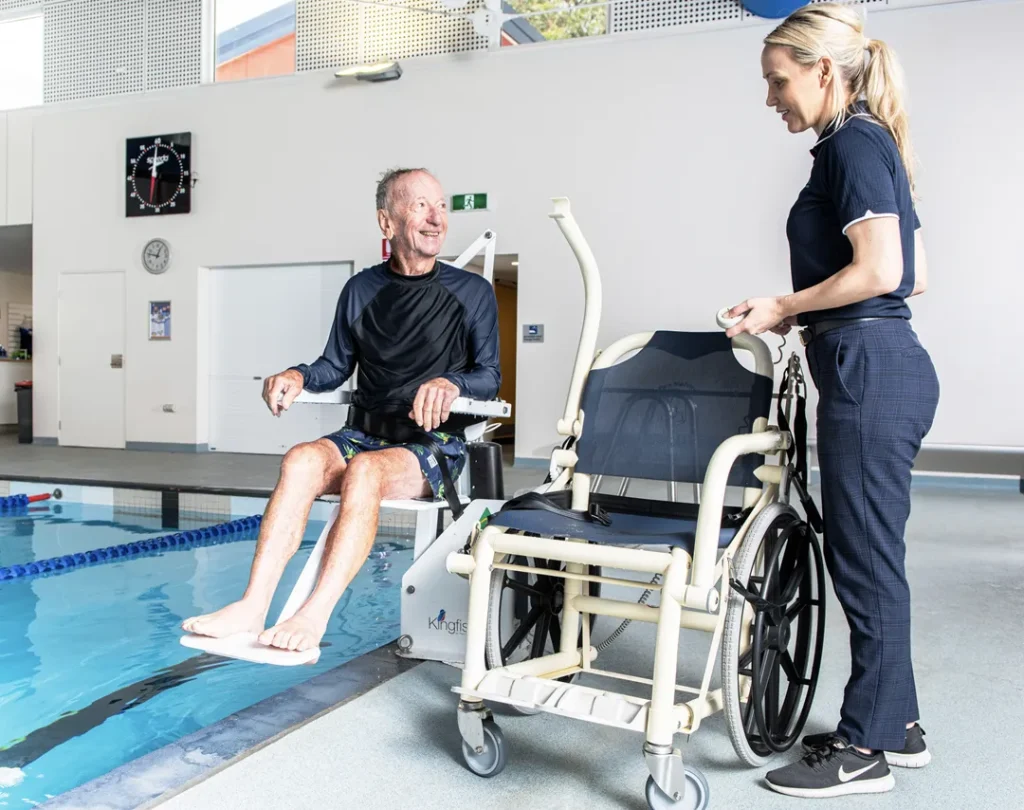
A wheelchair user arrives at an aquatic centre ready to swim. Their everyday wheelchair gets them through reception and into the change room, so why not simply use it right up to the pool?
Because standard wheelchairs aren’t designed for aquatic environments.
Water, pool chemicals, humidity and constantly wet surfaces create very different conditions to those an everyday wheelchair is designed to encounter. Taking a standard wheelchair poolside can potentially affect the chair while also making transfers and movement through wet areas more difficult.
That’s where a purpose-designed aquatic wheelchair can make an important difference.
Water and wheelchairs aren’t always a good combination
Everyday wheelchairs can contain metal components, bearings, electronics, upholstery, cushioning and other materials that aren’t intended for repeated exposure to water and pool chemicals.
Even if a chair never actually enters the pool, regular exposure to splashes and wet surfaces can be problematic.
For powered wheelchairs and other chairs incorporating electrical systems, keeping the equipment away from unnecessary water exposure is particularly important and manufacturer guidance should always be followed.
An everyday wheelchair can be essential, and sometimes highly customised, mobility equipment.
The pool deck isn’t the place to unnecessarily expose it to an environment it wasn’t designed for.
What happens at the change room?
This is where aquatic wheelchairs can become particularly useful.
Instead of taking an everyday wheelchair through wet areas, a user can transfer to a purpose-designed aquatic wheelchair at an appropriate point within the facility.
The aquatic wheelchair can then provide mobility through areas such as accessible change rooms, showers and the pool surrounds.
Depending on the pool configuration and the individual’s requirements, it may also support entry into the water via an accessible ramp or be used in conjunction with compatible pool access equipment.
This creates a more practical transition between dry-side mobility and aquatic access.
Aquatic wheelchairs are designed differently for a reason
Purpose-designed aquatic wheelchairs need to cope with an environment where getting wet isn’t an accident, it’s expected.
Para Mobility’s Platypus and Pelican Aquatic Wheelchairs, for example, use furniture-grade PVC frames suited to wet environments.
PVC offers several practical benefits around pools. It doesn’t rust and, importantly for Australian outdoor facilities, it doesn’t readily absorb heat like exposed metal surfaces can.
The chairs also feature open-weave seating material that allows water to drain rather than being retained within conventional upholstery.
Solid tyres, user-accessible hand brakes and corrosion-resistant construction further reflect the environment in which the chairs are intended to operate.
These are examples of how equipment changes when it is designed for the environment rather than simply taken into it.
There’s also a dignity consideration
Imagine arriving at a facility and being concerned that your everyday wheelchair, potentially worth thousands of dollars and fundamental to your independence, could become wet or damaged.
Or being asked to leave it somewhere without an appropriate alternative for moving through the facility.
Accessible aquatic design should consider the entire customer journey.
That means thinking beyond “How will this person get into the water?”
It also means asking:
- How will they move from the change room to the pool?
- Can they access the shower?
- Where can they safely transfer from their everyday wheelchair?
- What equipment is available once they’re in the wet zone?
- How will they return to their wheelchair after swimming?
Not every aquatic wheelchair needs to be attendant-controlled
Another important consideration is independence.
Where appropriate for the individual, an aquatic wheelchair that allows the user to propel and control the chair themselves can help maintain independence throughout more of their aquatic experience.
Para Mobility aquatic wheelchairs can be configured with user-control options, helping suitable users maintain greater control rather than automatically becoming reliant on an employee, family member or support worker simply because they have entered an aquatic environment.
It’s a small design consideration with a potentially significant impact on the person’s experience.
Think beyond the pool edge
A truly accessible aquatic facility isn’t created by focusing on one piece of equipment at the water’s edge.
Accessibility starts at arrival and continues through reception, changing facilities, showers, poolside movement, water entry, swimming, exit and the journey back to the change room.
An aquatic wheelchair can help connect several of those stages while keeping an individual’s everyday mobility equipment away from an environment it may not have been designed to withstand.
For aquatic facilities reviewing their accessibility, Para Mobility can help identify aquatic wheelchair and pool access solutions appropriate for different users, environments and methods of pool entry.