
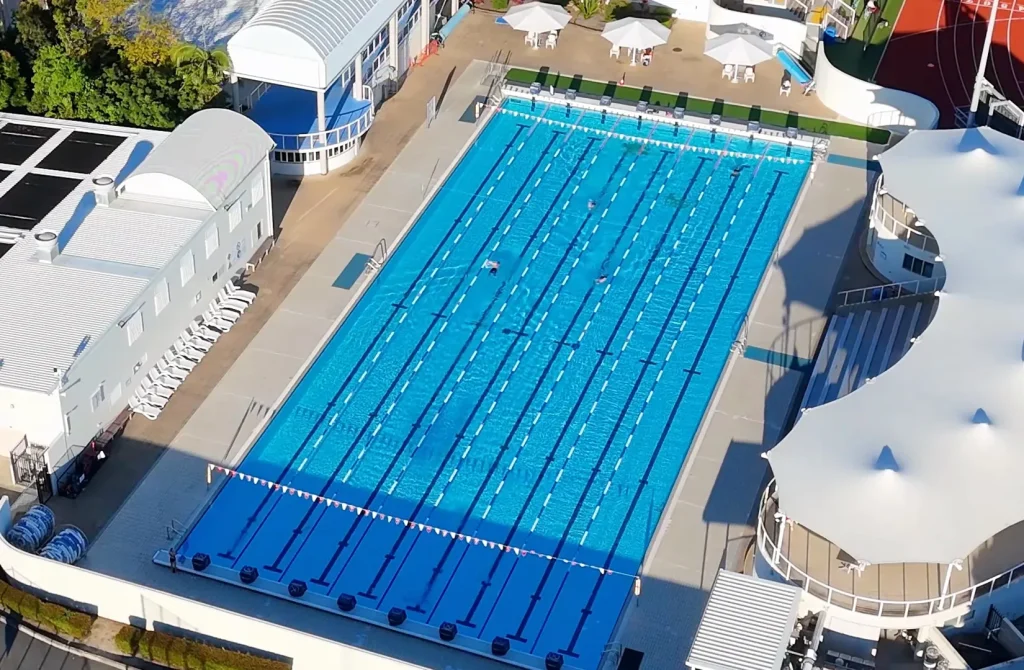
When councils invest in new aquatic facilities or upgrade existing pools, accessibility is usually part of the conversation. Compliance with building codes is considered, ramps are installed, and accessible amenities are included.
But true aquatic accessibility goes far beyond compliance.
The biggest barriers often appear after someone has already arrived at the pool. For many people living with disability, older Australians, or those recovering from injury, simply getting into the water can be the hardest part of the entire visit.
Many aquatic centres are designed to be accessible to the facility but not necessarily into the water.
Common oversights include:
- Reliance on ladders that many users cannot safely navigate
- Limited or outdated pool hoists that are difficult for staff to operate
- Only one accessible entry point servicing multiple pools
- Equipment that is permanently fixed, limiting flexibility
- No solution for accessing hydrotherapy pools, spas or learn-to-swim pools
- Limited consideration for people with temporary injuries, chronic conditions or reduced mobility due to ageing
These seemingly small gaps can determine whether someone enjoys an independent swimming experience or leaves without entering the water at all.
Compliance Is the Minimum Standard
Australian accessibility standards establish important minimum requirements, but they are exactly that: minimums.
The most successful aquatic facilities design around real people rather than simply meeting regulations.
This means considering:
- Independent access wherever possible
- Dignified experiences that reduce reliance on staff
- Safe manual handling for employees and carers
- Equipment suitable for users with varying mobility levels
- Future demographic changes, including Australia’s ageing population
When accessibility is viewed through the lens of inclusion rather than compliance, facilities become more welcoming for everyone.
Accessibility Benefits More People Than You Think
Accessible pool equipment is often associated exclusively with wheelchair users when in reality, many more people benefit from improved water access.
This includes:
- Older adults maintaining mobility and fitness
- People recovering from surgery or injury
- Individuals with neurological conditions
- Children with physical disabilities
- Veterans
- Pregnant women requiring low-impact exercise
- People managing arthritis or chronic pain
- Individuals participating in rehabilitation programs
Aquatic facilities that cater for this broader audience often see increased participation across multiple community groups.
Manual Handling Matters
Aquatic staff are passionate about helping people access the water, but without the right equipment they can be placed in physically demanding situations.
Manual lifting can increase the risk of injury for both staff and pool users.
Purpose-designed accessibility equipment significantly reduces manual handling while creating a safer, more consistent transfer process.
This not only improves workplace safety but also helps facilities maintain efficient operations.
Flexibility Creates Better Outcomes
Every pool and every community is different.
Some facilities benefit from portable pool hoists that can service multiple pools. Others require custom pool steps for gradual independent access. Aquatic wheelchairs provide safe movement around wet environments, while transfer systems can support users with higher support needs.
Rather than relying on a single solution, councils achieve better long-term outcomes by considering how different accessibility products work together to support a diverse range of users.
Think About the Entire Journey
A truly accessible aquatic experience considers every stage of a visitor’s journey:
- Accessible parking and pathways
- Change rooms and amenities
- Reception and customer service
- Pool entry
- Safe movement around pool surrounds
- Independent or assisted water access
- Exiting the pool safely
When each stage is considered, visitors experience confidence, dignity and greater independence.
Building More Inclusive Communities
Accessible aquatic facilities deliver benefits that extend well beyond recreation.
They support physical rehabilitation, improve mental wellbeing, encourage social connection, reduce isolation and create opportunities for people of all abilities to participate in community life.
For councils, investing in practical accessibility solutions isn’t simply about meeting today’s requirements—it’s about creating facilities that continue serving growing and changing communities for decades to come.
Planning Accessibility Beyond Compliance
Whether designing a new aquatic centre or upgrading an existing facility, involving aquatic accessibility specialists early in the planning process can identify opportunities that are often overlooked.
From portable pool hoists and aquatic wheelchairs to custom access solutions, thoughtful planning creates facilities where more people can participate safely, independently and with dignity. Contact our team to discuss options to suit your facility and tap into decades of hands-on experience that we are all too happy to share.