
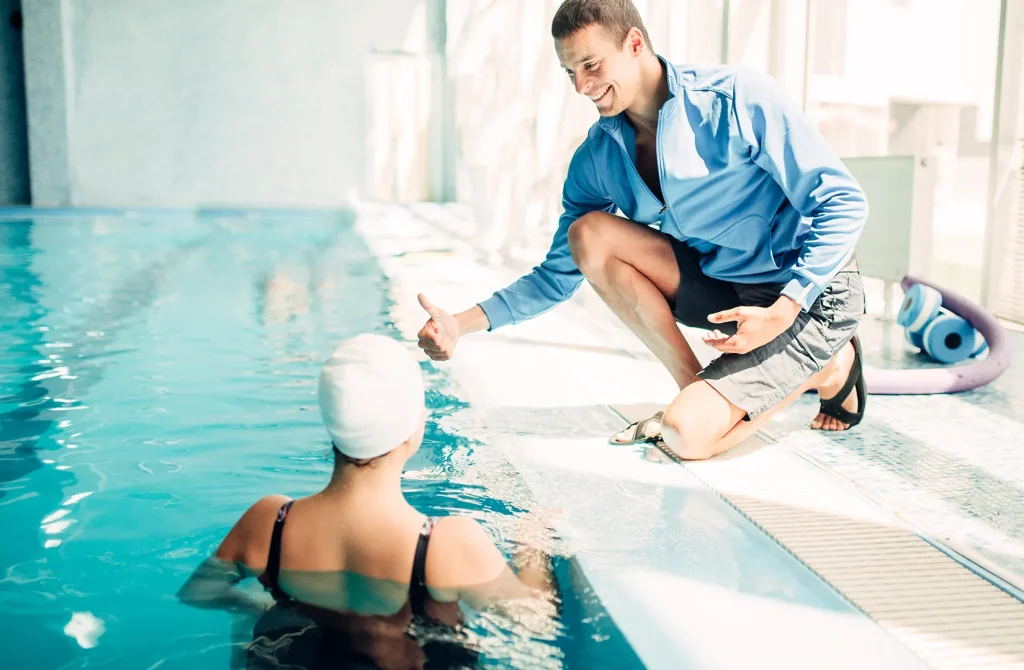
Each day, aquatic centre staff help people enjoy the physical, mental and social benefits of being in the water.
It’s one of the most rewarding parts of the job.
But behind these positive experiences is a workplace risk that is often underestimated: manual handling.
Assisting someone into or out of a pool without the right equipment can place significant strain on staff, carers and the person being assisted. While these lifts are often carried out with the best intentions, they can expose everyone involved to unnecessary risk.
The good news is that safer solutions already exist.
The Challenge of Pool Transfers
Water creates a unique environment. Wet surfaces, awkward body positions, changing buoyancy and confined spaces make transfers far more complex than lifting someone in a dry environment.
Aquatic staff may find themselves:
- Supporting a person’s full body weight.
- Twisting while standing on wet pool surrounds.
- Reaching over pool edges.
- Assisting guests with limited balance or mobility.
- Coordinating transfers with family members or carers.
- Performing multiple assisted transfers throughout the day.
Even when completed successfully, these repetitive tasks place ongoing stress on the body.
When people think about manual handling, they often focus on workplace injuries.
But unsafe transfers can also affect the person entering the pool.
Without appropriate equipment, there is an increased risk of:
- Slips or falls during transfers.
- Loss of confidence.
- Anxiety about entering the water.
- Reduced dignity and independence.
- Inconsistent transfer techniques between staff members.
The safest transfer is one that protects everyone involved.
Repetition Increases the Risk
Aquatic facilities often assist multiple people every day.
A single awkward lift may not result in immediate injury, but repeated manual handling over weeks, months and years can contribute to cumulative musculoskeletal strain.
This may lead to:
- Back injuries.
- Shoulder and neck pain.
- Knee and hip strain.
- Fatigue.
- Reduced staff confidence when assisting patrons.
These injuries can impact employee wellbeing, increase absenteeism and place additional pressure on the wider team.
Accessibility Equipment Supports Safer Workplaces
Purpose-designed accessibility equipment significantly reduces the need for manual lifting while creating safer, more consistent transfers.
Depending on the facility, solutions may include:
- Portable or fixed pool hoists.
- Aquatic wheelchairs.
- Transfer systems.
- Custom pool access steps with handrails.
- Independent access solutions that reduce the level of assistance required.
Rather than relying on physical strength, staff are supported by equipment specifically designed for safe pool access.
Reducing manual handling isn’t just about workplace safety. Guests also experience significant benefits.
When transfers become easier, people are more likely to return and participate regularly.
Training and Equipment Work Together
Even the best equipment is most effective when supported by appropriate staff training.
Aquatic centres should regularly review:
- Manual handling procedures.
- Staff competency.
- Equipment maintenance schedules.
- Emergency procedures.
- Accessibility pathways throughout the facility.
Creating a culture where staff understand safe transfer techniques helps protect both employees and visitors.
Investing in Prevention
Manual handling injuries can result in workers’ compensation claims, lost productivity, staff shortages and increased operational costs.
By comparison, investing in accessibility equipment delivers benefits every day.
Facilities often see:
- Reduced manual handling risks.
- Improved workplace safety.
- Better customer experiences.
- Increased participation by people with limited mobility.
- Greater confidence among staff and carers.
It’s an investment that supports both operational performance and community inclusion.
Creating Safer Aquatic Environments
Every person deserves the opportunity to enjoy the water safely.
Every staff member deserves the confidence that they have the right tools to assist without placing themselves at unnecessary risk.
When aquatic facilities invest in well-designed accessibility solutions, they create safer workplaces, improve the visitor experience and demonstrate a genuine commitment to inclusion.
Because protecting staff and improving accessibility aren’t competing priorities—they’re two outcomes achieved through the same thoughtful investment.
Whether upgrading an existing pool or designing a new aquatic facility, considering manual handling risks early can make a lasting difference.
Solutions such as pool hoists, aquatic wheelchairs and custom access systems help minimise physical strain, improve transfer safety and provide visitors with a more comfortable, dignified way to access the water.