
PROFILE
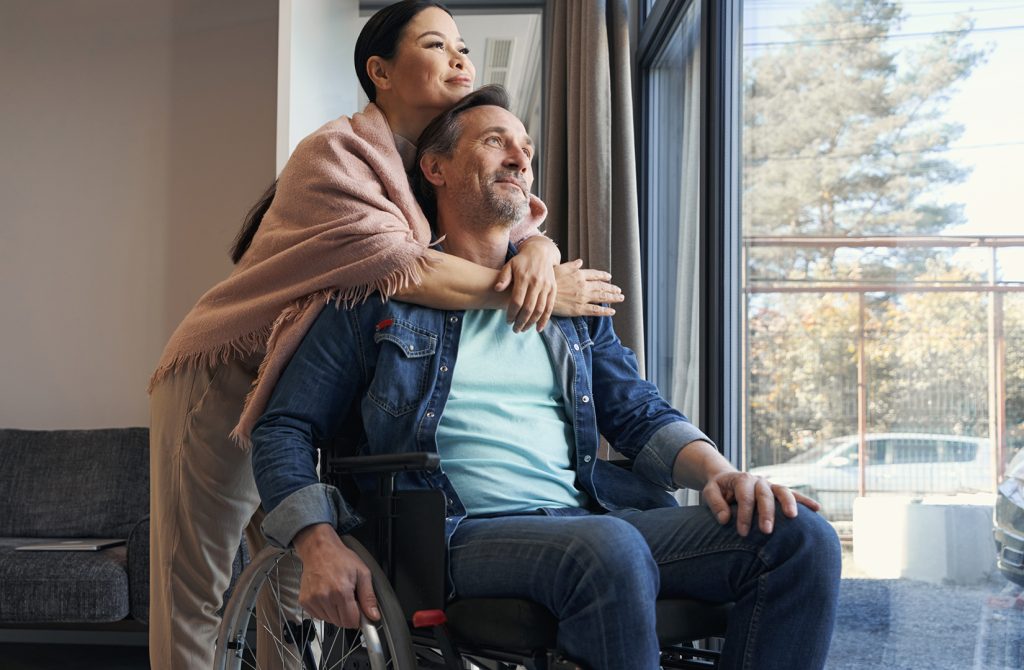
Client: David M.
Location: Gold Coast QLD
Background: Incomplete spinal cord injury following a cycling accident
Vehicle: Mid-size SUV (Subaru Forester)
Solution: IBIS Wheelchair to Car Access System
SETTING THE SCENE
Before his injury, David was rarely home. Weekends meant riding trails, early morning coffees by the water, and regular visits to see his family. After transitioning to a wheelchair, something as simple as getting into the car became a daily obstacle.
David’s wife, Kara, became his primary support for transfers. Lifting, pivoting and repositioning him into the passenger seat was physically demanding and, at times, unsafe. On difficult days, they chose not to go out at all.
“It wasn’t just the effort,” Kara shares. “It was the unpredictability. If one of us was tired or sore, the whole plan would change.”
CHALLENGES
Manual transfers were creating four key issues:
- Physical strain on Kara, with increasing risk of injury
- Reduced social connection, feeling isolated and detached from the world
- Limited independence for David, who relied entirely on assistance to travel
- No spontaneity, with outings needing careful planning and energy
Despite trying transfer boards and modified techniques, the process remained awkward and inconsistent.
THE SOLUTION
After speaking with a Gold Coast based occupational therapist, David was introduced to the IBIS Wheelchair to Car Access.
What stood out immediately was its simplicity. The IBIS mounts directly to the vehicle door hinge without permanent modifications. It is powered through the car’s 12V outlet and can be removed when not in use.
“It didn’t feel like we were redesigning our whole life around a piece of equipment,” David says. “It just fit into what we already had.”
David and Kara were able to operate it confidently on their own with their first real test trip to David’s favourite café.
“I remember sitting in the car thinking, that was it?” David recalls. “No stress, no awkward lifting. Just in and go.”
LIFE AFTER THE IBIS
Within weeks, the IBIS system had become part of their daily routine.
David can now control much of the transfer process himself, reducing reliance on Kara. They take more frequent outings and spontaneity is back on the cards again. Both feel more comfortable leaving the house without overthinking the logistics.
Kara notes that the biggest change is not just physical, but mental.
“It’s taken away that hesitation. We don’t second guess going out anymore. David’s mood has lightened as he is more connected to many aspects of his old life again.”
Today, David is back to many of the things he enjoyed before his injury. He meets friends for coffee, attends family events, and regularly spends time outdoors.
The IBIS has not just made transfers easier. It has helped restore a sense of normality.
“You don’t realise how much you miss the small things until they come back,” David says. “Being able to just get in the car and go. That’s freedom.”
CONCLUSION
For many individuals and families, the barrier to mobility is not the destination. It is the transition in and out of the vehicle.
Solutions like the IBIS Wheelchair to Car Access System remove that barrier in a practical, low impact way. No major vehicle modifications. No complex setup. Just a safer, more manageable way to move.
And in cases like David’s, that can mean the difference between staying home and getting back to life.