
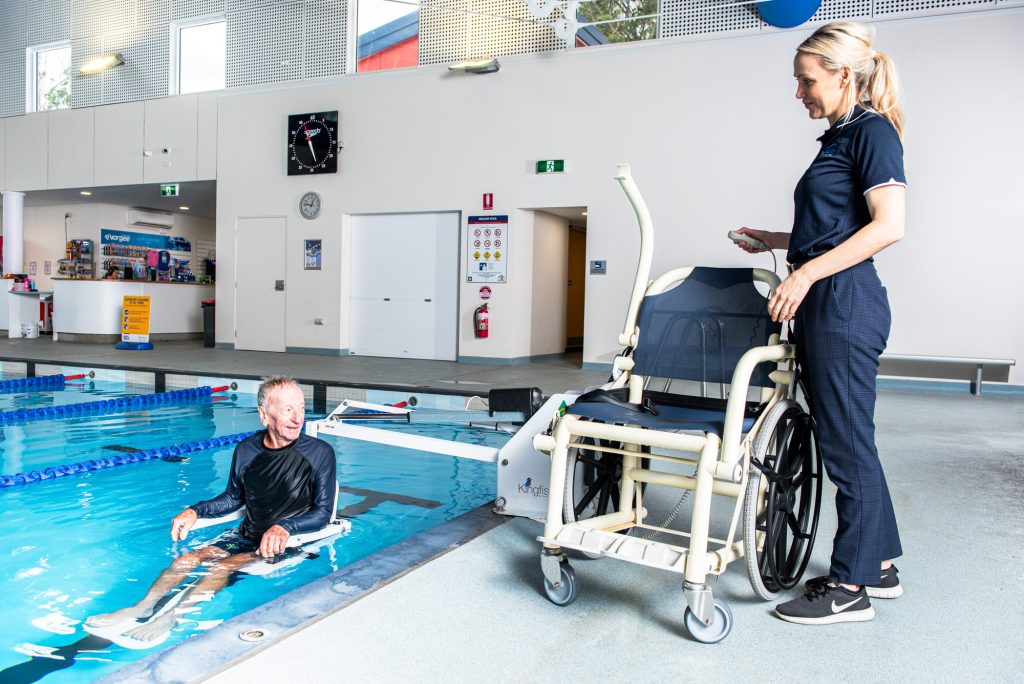
Manual handling injuries are one of the most common (and costly) risks in aquatic facilities. Lifting, supporting, transferring, or stabilising patrons often in wet, slippery, and unpredictable conditions puts staff under real physical strain. Add water resistance, uneven pool edges, and varying user needs, and the risk profile rises quickly.
The good news is that many of these risks are preventable with the right equipment, thoughtful design, and a move away from “people-powered” solutions.
Why aquatic environments are high-risk
Aquatic centres face a perfect storm of manual handling challenges:
- Wet surfaces increasing slip risk
- Unpredictable movement from patrons in water
- Awkward postures when leaning, lifting, or twisting
- Repetitive transfers throughout the day
- Pressure to assist quickly, especially in busy public facilities
Even well-trained staff are vulnerable when the environment itself works against safe lifting techniques.
Equipment that reduces risk (and effort)
1. Pool and spa hoists
Powered hoists like the Pelican, Pelican Plus and Kingfisher allow safe, controlled transfers into and out of the water without staff needing to lift or support body weight.
Manual handling benefits:
- Eliminates heavy lifting
- Predictable, repeatable transfers
- Reduces need for multiple staff during assistance
- Allows staff to remain in neutral, upright postures
For facilities, this means safer operations. For users, it means dignity, comfort and independence.
2. Pool steps designed for access
Accessible pool steps provide a gradual, stable entry point for users who can walk but need additional support.
Why steps matter:
- Reduces reliance on staff assistance
- Encourages self-directed entry and exit
- Minimises sudden weight-bearing movements
- Supports a wider range of abilities than ladders
From a risk perspective, steps turn a lift into a walk making them one of the safest transitions you can design.
3. Aquatic wheelchairs
Aquatic wheelchairs bridge the gap between change rooms, pool surrounds, and water entry points.
Manual handling advantages:
- No need for staff to carry or support users
- Stable transport across wet surfaces
- Better control and predictability during movement
- Reduced risk of slips, trips, and falls
They also streamline operations by creating clear, repeatable access pathways.
Designing out risk, not managing it
The most effective manual handling strategies don’t rely on staff vigilance alone. They rely on design.
When facilities invest in:
- Hoists instead of human lifts
- Steps instead of ladders
- Aquatic wheelchairs instead of hands-on support and assistance
They move from reactive risk management to proactive injury prevention.
This aligns with Australian WHS principles: eliminate hazards where possible, rather than controlling them through training alone.
A better outcome for everyone
Reducing manual handling risks is about creating aquatic spaces that work better for everyone:
- Staff stay safer, healthier, and more confident
- Patrons gain independence and dignity
- Facilities reduce claims, downtime, and operational stress
- Communities benefit from truly inclusive access
The water should be a place of freedom and enjoyment not risk and strain. With the right equipment and approach, aquatic environments can be safer, smarter, and more inclusive by design.