
For many people living with disability, reduced mobility or age-related physical challenges, getting from one place to another can be one of the biggest obstacles to maintaining an active and connected life.
Whether it’s attending a medical appointment, visiting family, participating in community activities or simply enjoying a day out, transport access often determines what is possible and what isn’t.
The reality is simple: if people cannot get there, they cannot participate.
Participation Begins Before You Arrive
Participation begins long before a person arrives at their destination.
It begins at home.
If a person cannot safely and comfortably transfer into a vehicle, every activity outside the home becomes more difficult.
Over time, these challenges can lead to fewer outings, reduced independence and increased social isolation.
The Hidden Impact of Transport Barriers
Transport challenges often develop gradually.
A person who previously transferred independently may begin to require assistance. A family member may find transfers increasingly difficult as physical needs change. What was once a simple outing can become a complex logistical exercise.
Eventually, some people begin declining invitations, cancelling appointments or reducing community participation because the process of getting there feels too difficult.
The consequences extend beyond mobility.
Research consistently shows that reduced participation can contribute to:
- Social isolation
- Loneliness
- Reduced physical activity
- Lower confidence
- Declining mental wellbeing
- Reduced community engagement
In many cases, the barrier is not the activity itself, it’s the transport required to access it.
Independence Creates Opportunity
One of the most powerful outcomes of improved transport access is increased independence.
When people have greater confidence in their ability to travel, opportunities expand.
They are more likely to attend appointments, participate in activities, visit friends and family and engage with their community.
For many individuals, independence is about having reliable and practical ways to leave the house without creating physical strain, stress or risk for themselves or those assisting them.
This is where accessible vehicle transfer solutions can make a significant difference.
The Challenge of Vehicle Transfers
For many wheelchair users and people with mobility limitations, transferring into a vehicle is one of the most physically demanding parts of a journey.
Traditional transfer methods often require significant lifting, awkward movements and physical effort from both the individual and the person assisting them.
These challenges can create risks including:
- Falls during transfer
- Shoulder and upper limb strain
- Back injuries for carers
- Fatigue
- Loss of confidence
- Reduced willingness to travel
Over time, these barriers can have a direct impact on participation.
If every outing becomes physically demanding, people naturally begin limiting how often they leave home.
A Simpler Approach: The IBIS Wheelchair to Car Access System
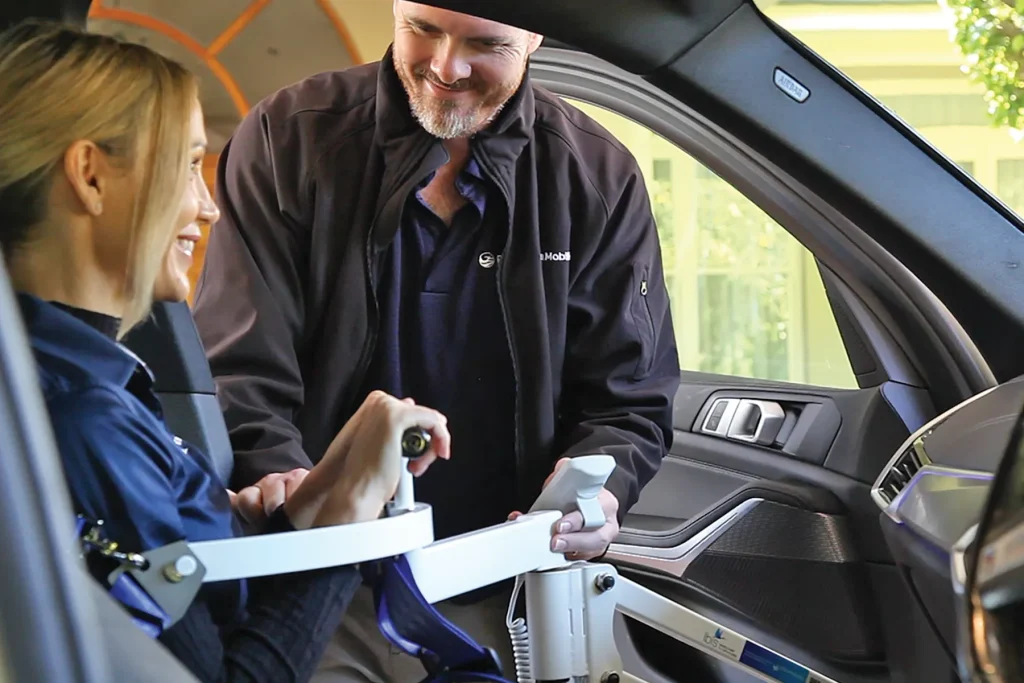
The IBIS Wheelchair to Car Access System was developed to address transferring safely between a wheelchair and a vehicle seat.
Unlike many vehicle modification solutions, the IBIS system is designed to be portable and versatile.
The lightweight unit attaches to the vehicle using a hinge-mounted system and is powered through a standard vehicle power outlet. Importantly, it does not require permanent vehicle modifications, making it suitable for use across a wide range of vehicles.
This flexibility can be particularly valuable for:
- Families
- Support workers
- Community transport providers
- Regional and rural users
- Individuals who regularly change vehicles
The goal is to reduce the physical demands associated with transfers while supporting safer and more dignified access to transport.
Supporting Participation Across the Lifespan
Transport access affects people of all ages.
- A young adult may want to attend university, employment or social events.
- A parent may want to take their child to activities and appointments.
- An older person may wish to continue attending community groups, visiting friends or participating in recreational activities.
In each case, transport access directly influences what is possible.
By making vehicle transfers easier and safer, solutions such as the IBIS can help maintain connections that are essential to wellbeing and quality of life.
Benefits Beyond the Individual
Improved transport access does not only benefit the person using the equipment.
Families, carers and support workers often experience significant physical and emotional demands when assisting with vehicle transfers.
Reducing manual handling requirements can help:
- Minimise injury risk
- Reduce physical strain
- Improve confidence
- Make outings easier to plan
- Increase opportunities for spontaneous participation
When transport becomes easier, everyone benefits.
Helping More People Stay Connected
The ability to access transport often determines whether someone can participate in the wider community.
Solutions such as the IBIS Wheelchair to Car Access System help reduce barriers by making vehicle transfers safer, easier and more practical for individuals, families and support networks.
Because accessibility is about connection and ensuring that everyone has the freedom to participate in the life they choose.
Click here to learn more about the IBIS Wheelchair to Car Access System.